
 Quick Support
Custom Built Computers
Twenty years and a thousand-plus builds
Quoted per build
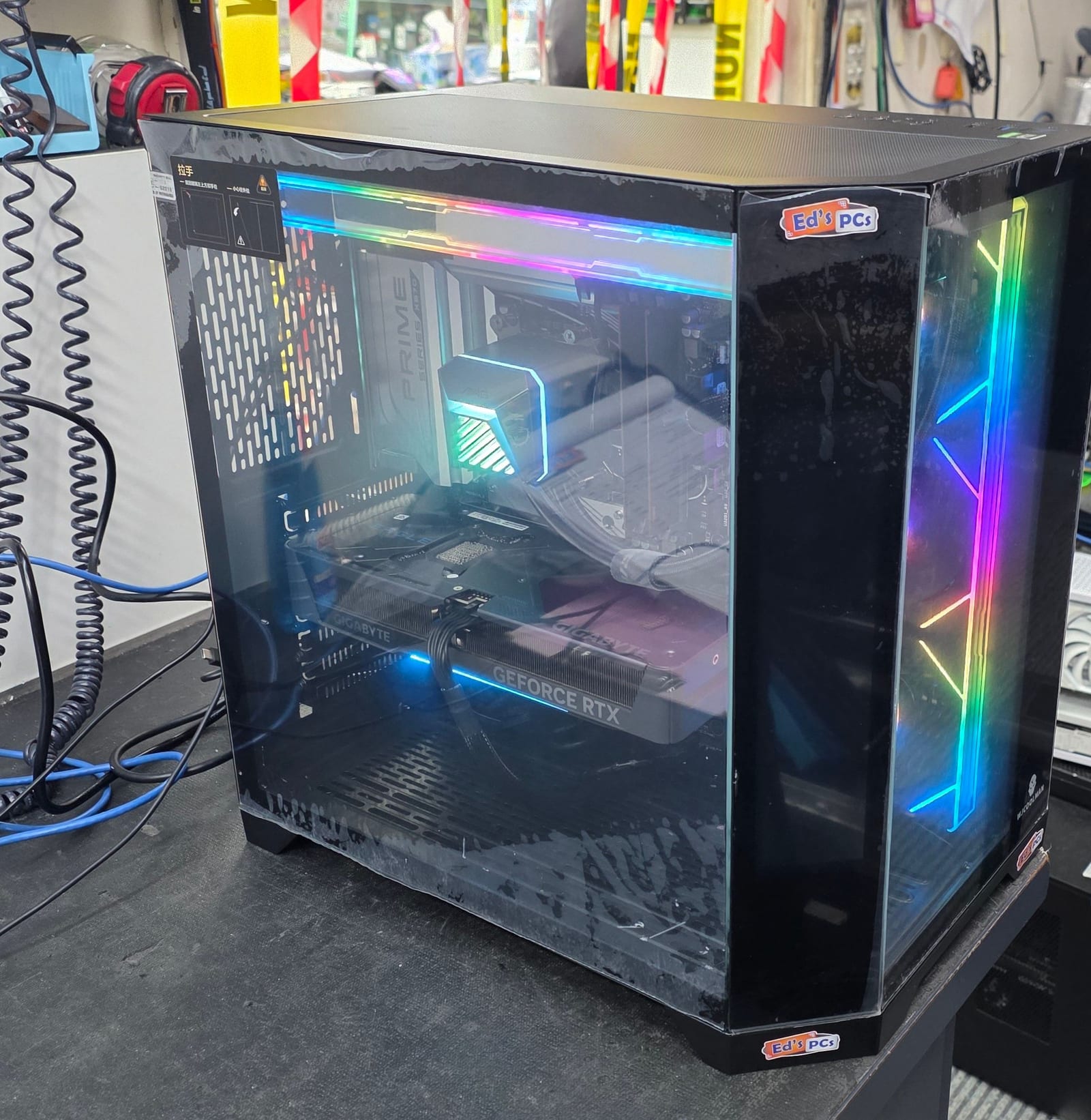
Anyone can screw parts into a case. What you're paying for is what happens inside it — the cable routing, the airflow, the labelling that means the next person to open it can actually work on it. Over a thousand gaming machines through this workshop and the standard hasn't moved.
What the Work Looks Like
Recent Builds
See the full gallery →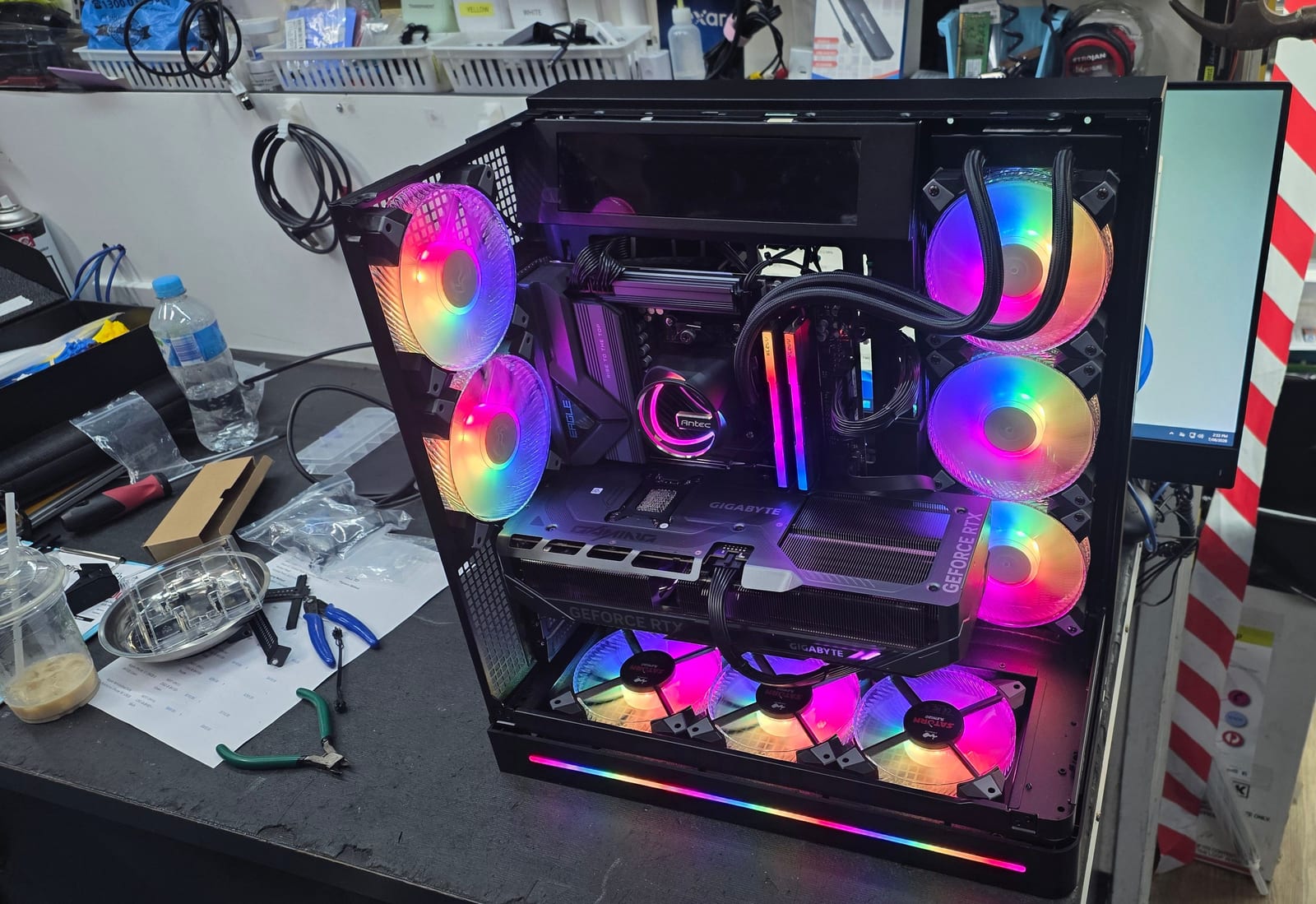
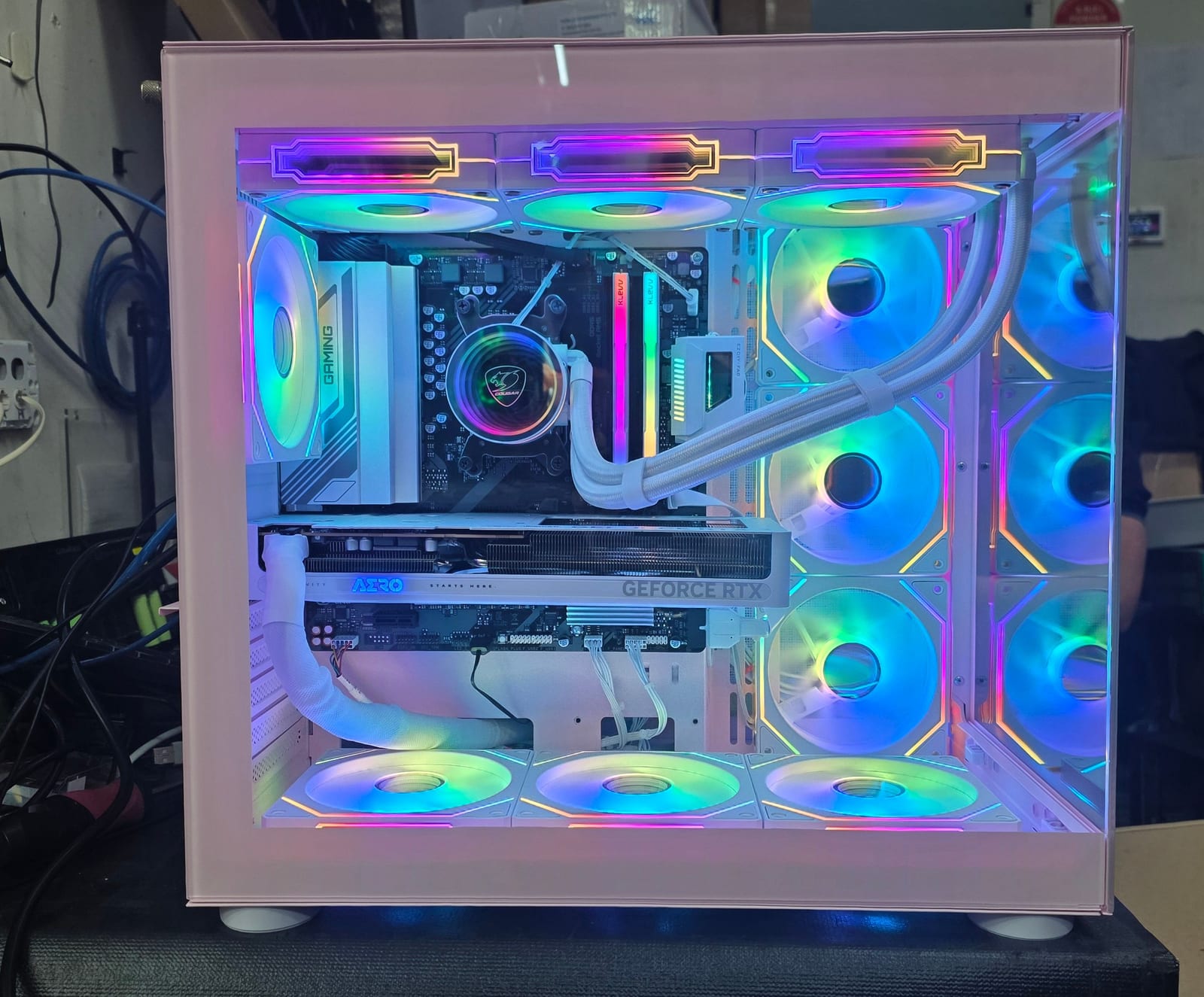
Cable Management You Can Service
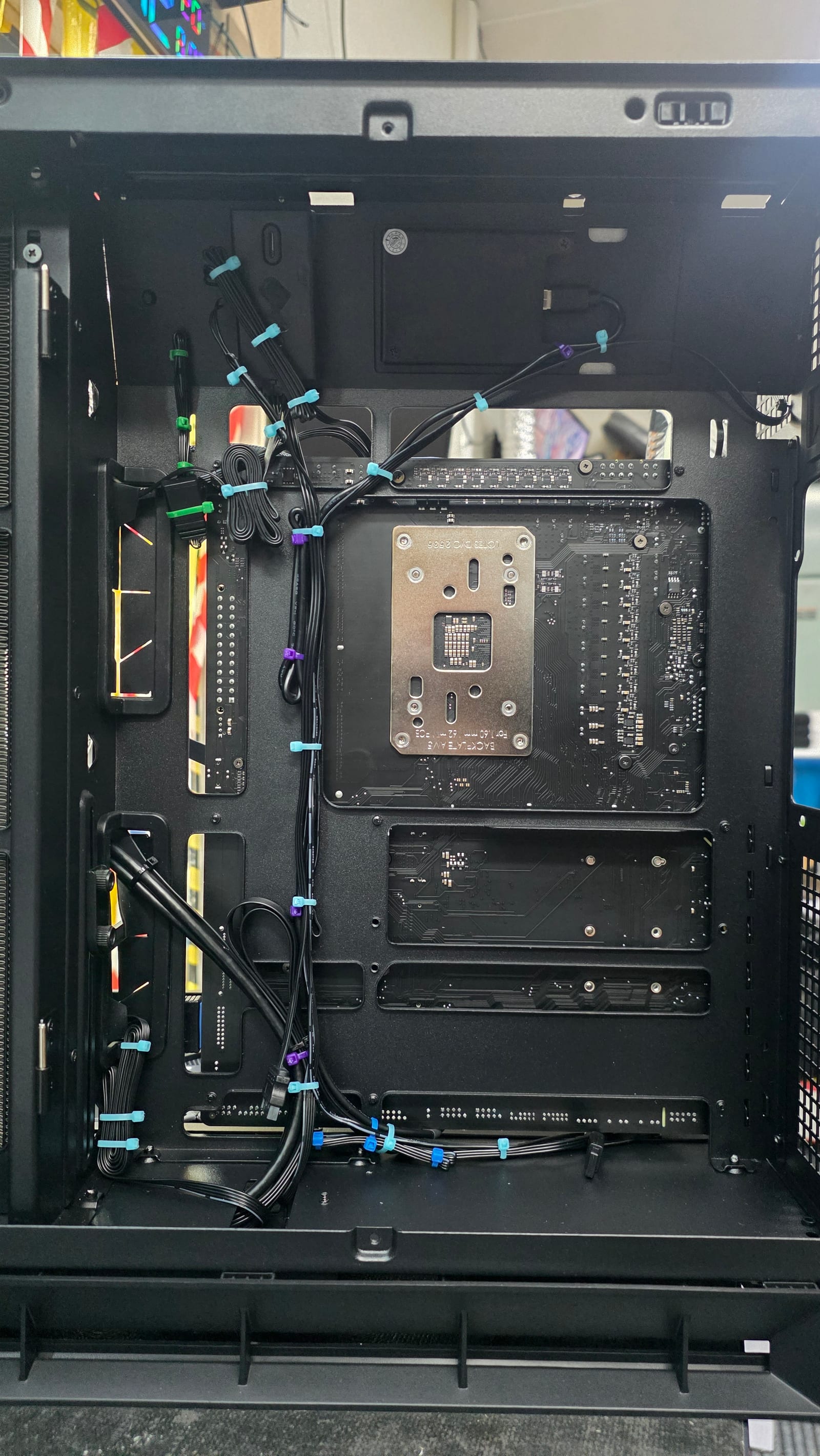
Cables are layered and routed properly, then zip-tied by colour — a different colour for each cable path and component group. That isn't decoration. Two years from now, when a power supply needs replacing, whoever opens the case can see at a glance which cables belong to it and pull just those. Power, ARGB, fan headers, front-panel and USB never get bundled together, so changing one thing doesn't mean unpicking everything.
Already got a machine? We'll rewire it
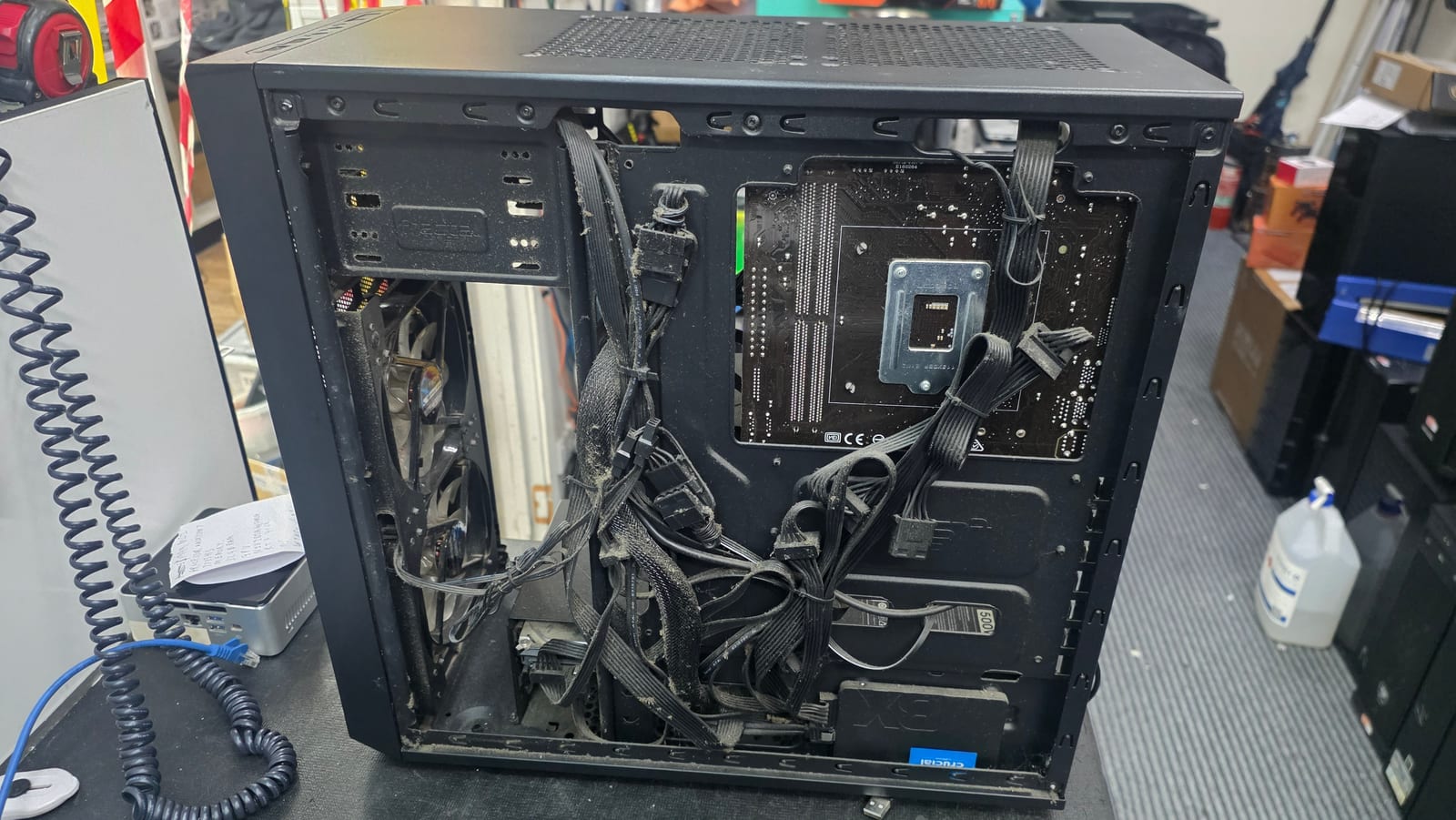
Rewiring and cable tidy-ups are their own job, not just something that happens to new builds — if the inside of your case looks like the photo above, bring it in. Same standard, same colour-coded routing, whatever's already in the case.
Specced for What You Actually Run
We start with the games, the software and the screens, then work backwards to the parts — which usually means spending more in one place and less in another than an off-the-shelf machine does. No mystery power supplies, no bottlenecked pairings, no paying for numbers that don't help your workload.
Finished Properly
- Laser-engraved plate on high-end builds — done on our own engraver
- Custom Ed's PCs stickers, including labelling on the ports you should actually use
- Diorama themes built into the case for anyone who wants one — very few shops will do this
- Tested under load before it leaves, not just POSTed and boxed
Who Actually Builds It
Someone trained to build it properly, at either store. Both stores run their own training program, and nobody is signed off to build a customer machine until they can hit the standard consistently on our own gear first — which is why two machines built by two different people still look like they came off the same bench. Your build isn't going to be somebody's first attempt, and it isn't getting thrown together by whoever happened to be free that afternoon.
Upgrades Count Too
Often the honest answer isn't a new machine. A drive, more memory or a graphics card in what you've already got can be the difference, and we'll tell you when that's the better spend.
Not sure if we can do it?
Ask anyway. We've said yes to stranger requests than yours.